

Professional Services
Artifical Intelligence
Artifical Intelligence Tennessee
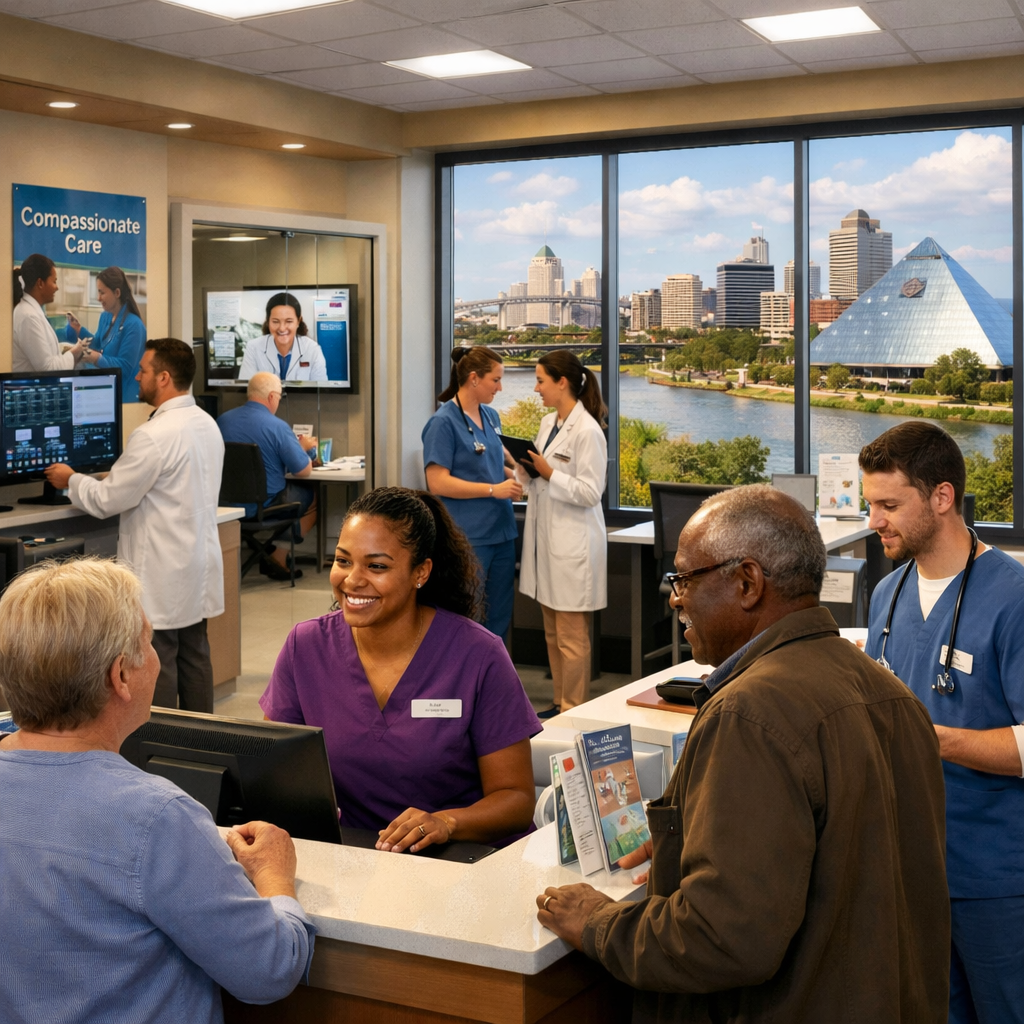

Memphis healthcare organizations face mounting pressure to modernize technology infrastructure while maintaining compliance, securing patient data, and ensuring operational continuity—strategic technology consulting bridges the gap between immediate IT needs and sustainable business growth.
Healthcare practices across Memphis face a persistent challenge: technology spending that fails to translate into measurable business outcomes. Many medical organizations invest substantial resources in electronic health records, practice management systems, and communication platforms, yet struggle to achieve the operational efficiency and patient satisfaction improvements these investments promise. The disconnect stems from a transactional approach to IT—purchasing systems reactively rather than building technology infrastructure strategically aligned with practice objectives.
Medical administrators and managing physicians often find themselves caught between immediate operational demands and long-term modernization needs. When technology decisions are driven by urgent issues rather than strategic planning, practices end up with fragmented systems that don't communicate effectively, security vulnerabilities that threaten HIPAA compliance, and infrastructure that becomes obsolete before delivering adequate return on investment. This reactive cycle prevents healthcare organizations from leveraging technology as a growth enabler.
The complexity of healthcare technology environments compounds these challenges. Between clinical systems, billing platforms, patient portals, telehealth solutions, and communication tools, medical practices operate multiple interdependent systems that require careful coordination. Without strategic oversight, these technology investments remain disconnected from business objectives around patient care quality, operational scalability, revenue cycle efficiency, and competitive positioning in the Memphis healthcare market.
Strategic technology consulting addresses this fundamental disconnect by establishing a framework that connects every IT investment to specific business outcomes. Rather than treating technology as a cost center, vendor-neutral advisory services help healthcare practices view infrastructure modernization, cybersecurity enhancements, and digital transformation initiatives as strategic capabilities that enable sustainable growth, improved patient experiences, and operational resilience.
Healthcare infrastructure planning requires a comprehensive understanding of clinical workflows, patient volume projections, regulatory requirements, and operational dependencies that impact daily practice performance. Strategic technology assessments evaluate current infrastructure capabilities against both immediate operational needs and long-term growth objectives, identifying gaps that limit scalability, create workflow inefficiencies, or expose the practice to operational risk.
Modern healthcare practices in Memphis need infrastructure that supports multiple locations, enables secure remote access for telehealth services, integrates clinical and administrative systems, and scales efficiently as patient volumes grow. Technology consulting establishes infrastructure roadmaps that balance modernization investments with budget realities, prioritizing upgrades that deliver the greatest operational impact while building toward a cohesive technology environment that supports evolving care delivery models.
Server infrastructure, network architecture, data storage systems, and application platforms all require careful planning to ensure reliability during peak operational periods. Healthcare organizations cannot afford downtime that disrupts patient scheduling, clinical documentation, or billing processes. Strategic infrastructure planning incorporates business continuity considerations, redundancy requirements, and performance benchmarks that align technology capabilities with patient care standards and operational expectations.
Vendor-neutral consulting ensures infrastructure decisions reflect practice-specific needs rather than vendor preferences. By evaluating solutions across the technology marketplace, advisory services help medical practices select platforms that integrate effectively with existing clinical systems, support industry-standard protocols, and provide the flexibility to adapt as healthcare technology continues to evolving. This approach prevents vendor lock-in while building infrastructure that remains relevant as practice requirements change over time.
Cybersecurity represents one of the most critical technology challenges facing Memphis healthcare practices today. Medical organizations handle highly sensitive patient information that makes them attractive targets for ransomware attacks, data breaches, and other cyber threats. Beyond the immediate operational disruption these incidents cause, security failures threaten HIPAA compliance, expose practices to significant financial penalties, and damage the patient trust that forms the foundation of successful healthcare organizations.
Strategic cybersecurity planning establishes multilayered security frameworks tailored to healthcare operational environments. Rather than implementing generic security solutions, technology consulting evaluates specific vulnerabilities within clinical workflows, identifies high-risk access points, assesses third-party vendor relationships, and develops security controls that protect patient data without creating workflow friction that impacts care delivery. This balanced approach ensures security measures enhance rather than hinder operational efficiency.
HIPAA compliance extends beyond technical security controls to encompass policies, procedures, staff training, and documentation requirements that demonstrate ongoing commitment to patient privacy protection. Technology consulting helps healthcare practices establish compliance frameworks that address the full scope of regulatory requirements, conduct regular risk assessments, implement appropriate administrative safeguards, and maintain the documentation necessary to demonstrate compliance during audits or investigations.
Business continuity planning integrates with cybersecurity strategy to ensure practices can maintain essential operations during security incidents or system failures. Strategic planning establishes data backup protocols, recovery time objectives for critical systems, alternative communication channels, and incident response procedures that minimize operational disruption. This comprehensive approach protects both patient data and practice operations, ensuring healthcare organizations can deliver consistent care regardless of technology challenges.
Cloud computing offers healthcare practices significant opportunities to modernize infrastructure, improve system accessibility, and optimize technology spending. However, cloud migration requires strategic planning that considers data security requirements, application compatibility, network bandwidth, integration complexity, and the operational impact of transitioning from on-premises systems to cloud-based platforms. Technology consulting provides the vendor-neutral guidance necessary to navigate these considerations and develop migration strategies aligned with practice objectives.
Strategic cloud assessments evaluate which applications and data workloads benefit most from cloud deployment versus those better suited to on-premises infrastructure. Hybrid cloud architectures often provide the optimal balance for healthcare organizations, enabling practices to leverage cloud scalability and accessibility for appropriate workloads while maintaining direct control over highly sensitive clinical systems or applications with specific performance requirements. This nuanced approach ensures cloud investments deliver measurable operational and financial benefits.
Cost optimization represents a primary driver for cloud adoption, but realizing these savings requires careful planning around service tiers, usage patterns, data transfer costs, and subscription management. Technology consulting helps healthcare practices understand the total cost of cloud ownership, identify opportunities to rightsize resources, implement governance policies that prevent cost overruns, and negotiate favorable terms with cloud service providers. This strategic approach ensures cloud migration delivers the anticipated financial benefits rather than creating unexpected expense increases.
Cloud platforms enhance operational accessibility by enabling secure remote access to practice management systems, clinical applications, and patient data from any location. This capability supports telehealth initiatives, allows clinicians to access patient information outside the office, and enables administrative staff to work flexibly when necessary. Strategic cloud planning ensures these accessibility improvements incorporate appropriate security controls, maintain HIPAA compliance, and integrate seamlessly with existing clinical workflows and patient care processes.
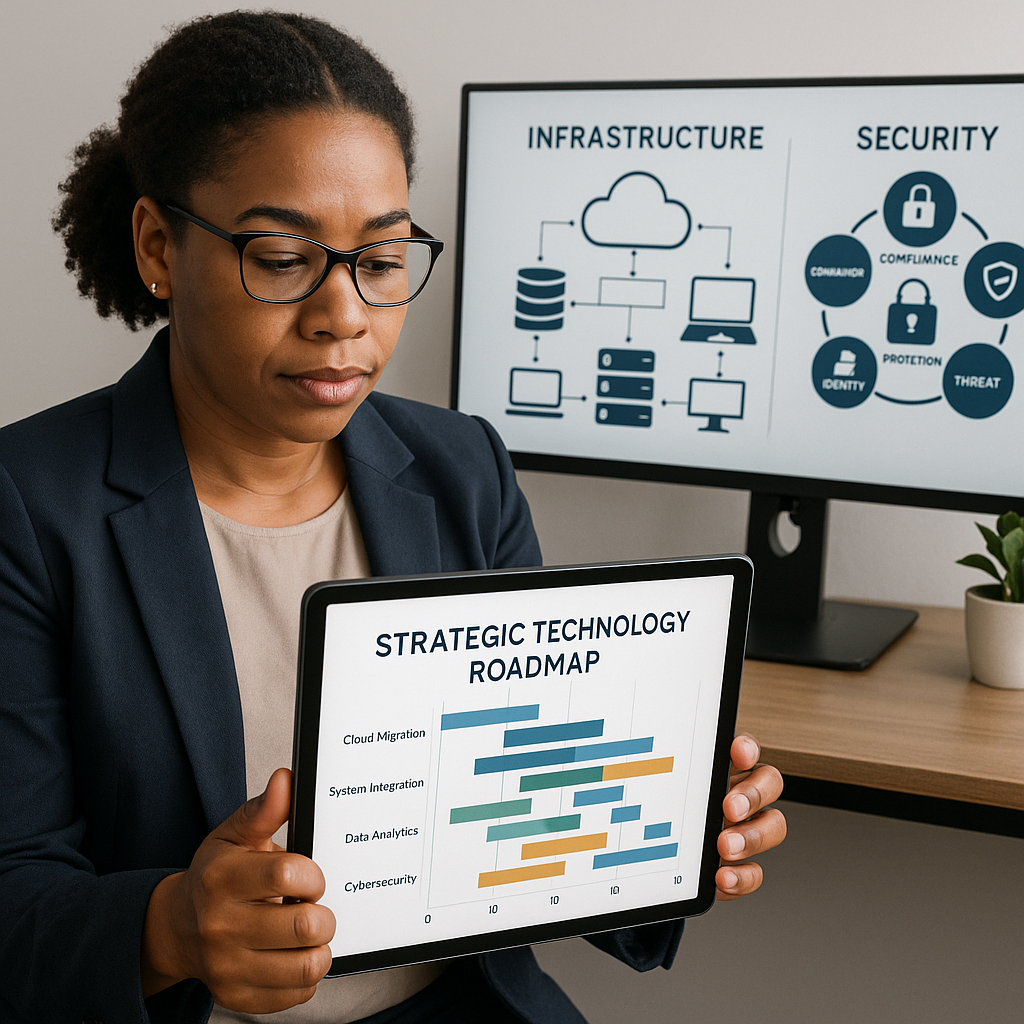
Technology roadmapping establishes the strategic framework that connects IT investments to specific business outcomes over multi-year planning horizons. Rather than reacting to immediate technology issues or pursuing opportunistic upgrades, healthcare practices with comprehensive roadmaps make deliberate investment decisions that build toward cohesive technology environments supporting patient care excellence, operational efficiency, and sustainable growth. This disciplined approach transforms technology from a cost center into a strategic asset that enables competitive advantage.
Effective roadmaps balance competing priorities around infrastructure modernization, cybersecurity enhancement, application upgrades, workflow automation, and digital transformation initiatives. Technology consulting facilitates the prioritization process by evaluating each potential investment against criteria including operational impact, risk mitigation, compliance requirements, integration complexity, and alignment with strategic objectives. This structured assessment ensures limited IT budgets focus on initiatives delivering the greatest value to practice performance and patient satisfaction.
Multi-year technology roadmaps provide the planning visibility necessary for informed budget allocation, phased implementation strategies, and change management preparation. Healthcare administrators gain clear understanding of upcoming technology investments, enabling better financial planning and reducing the disruptive impact of large unexpected IT expenditures. Roadmaps also facilitate stakeholder communication by articulating how technology initiatives support broader practice objectives around patient care quality, operational scalability, and market competitiveness.
Strategic technology consulting establishes ongoing advisory relationships that adapt roadmaps as practice circumstances evolve, new technologies emerge, and business priorities shift. Rather than static planning documents that become obsolete, effective roadmaps function as living strategic frameworks that guide technology decision-making while remaining flexible enough to accommodate changing conditions. This partnership approach ensures Memphis healthcare practices maintain technology environments that consistently support operational excellence and position organizations for sustained success in an increasingly competitive healthcare market.